Mechanics of Biological Tissues
The structure-function relationships of biological materials are critical to understating tissue development, function, disease, and therapy. We use custom-built devices to simultaneously study structure and mechanics of biological tissues.
category link:
/research/mechanics-of-biological-tissues
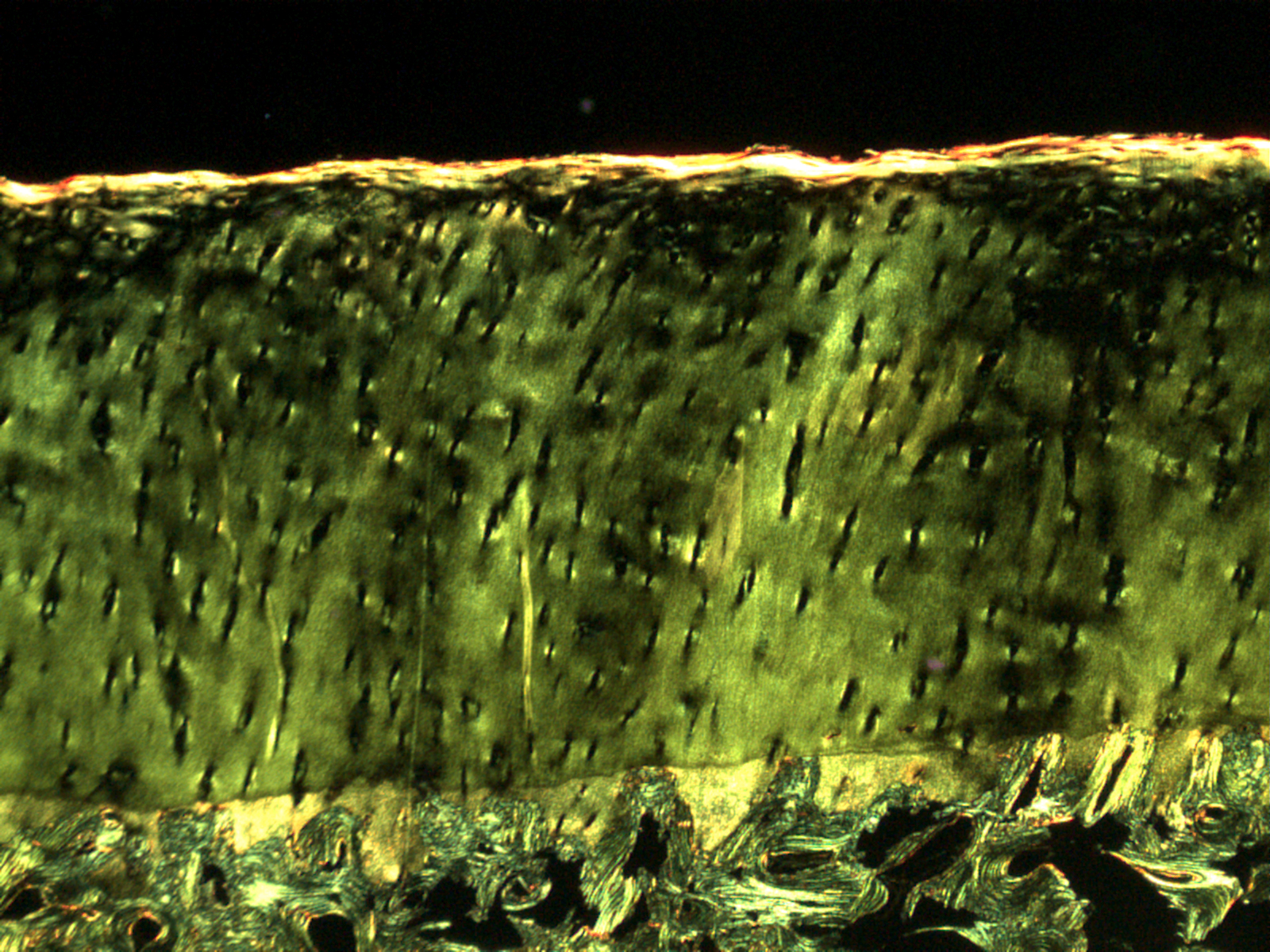
Articular cartilage (AC), a biological tissue that protects and lubricates joints, plays a critical role during healthy locomotion. While much is known about this tissue's biochemistry and compressive mechanical properties, comparatively less attention has been given to its shear mechanical properties. This represents a critical knowledge gap because cartilage tissue experiences significant shear under normal loading conditions, and may indeed most frequently fail in such circumstances.
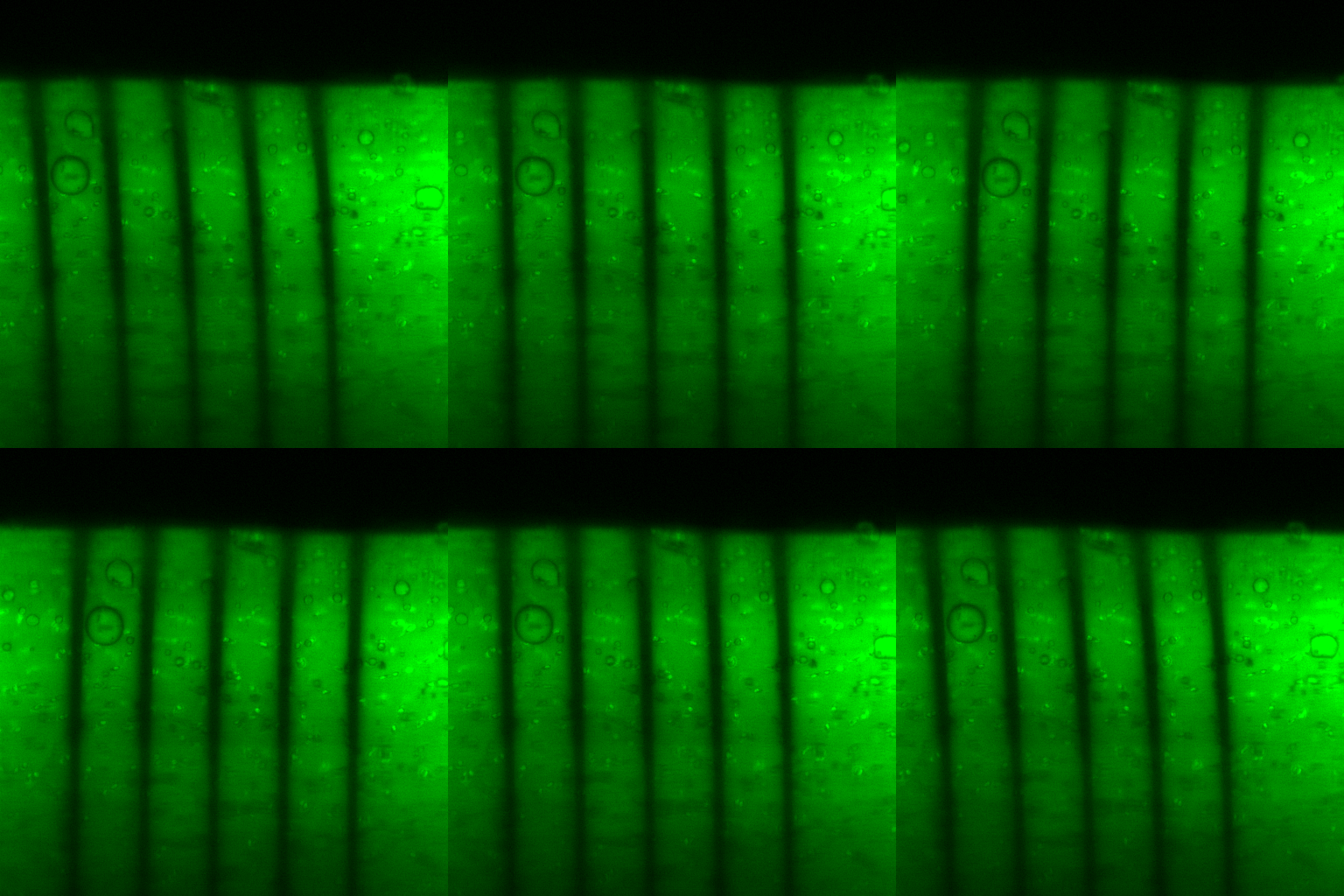
Articular cartilage (AC), a biological tissue that protects and lubricates joints, plays a critical role during healthy locomotion. Ongoing work in the Cohen lab has been examining the spatially heterogeneous mechanical properties of this tissue using confocal rheology. This technique allows us to simultaneously deform the tissue with a known stress and measure the local strain field. From this information, we can calculate the local shear properties.
Pages